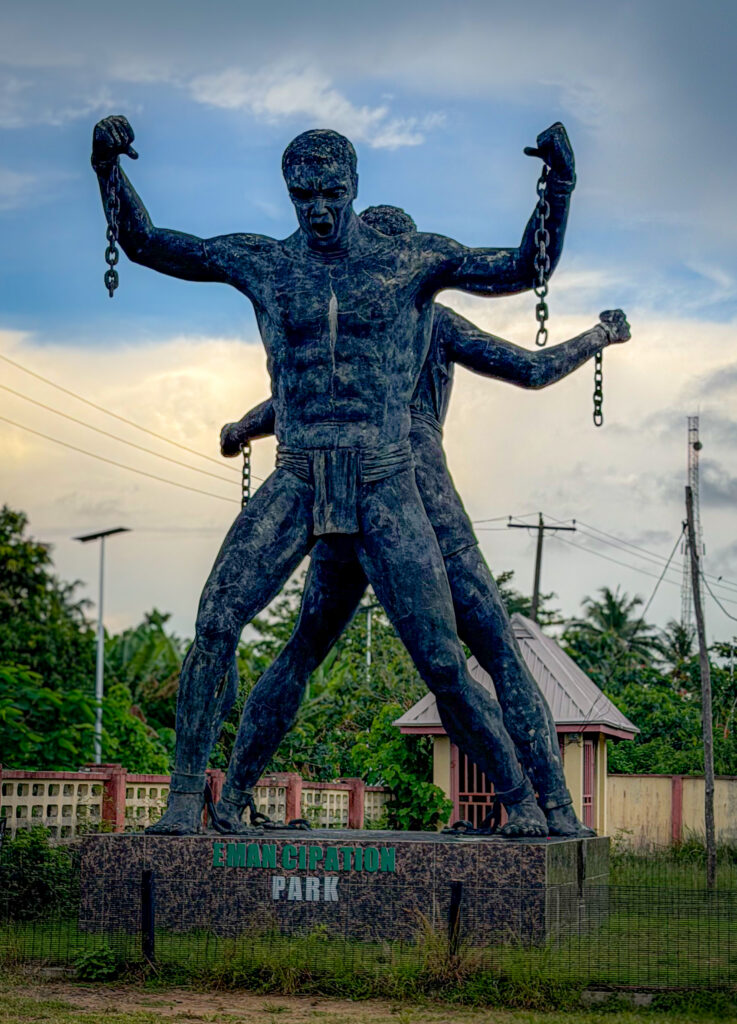
About two hours west of Lekki, close to Nigeria’s border with Benin, lies Badagry — a fairly quiet coastal town with an extraordinary and deeply uncomfortable history.
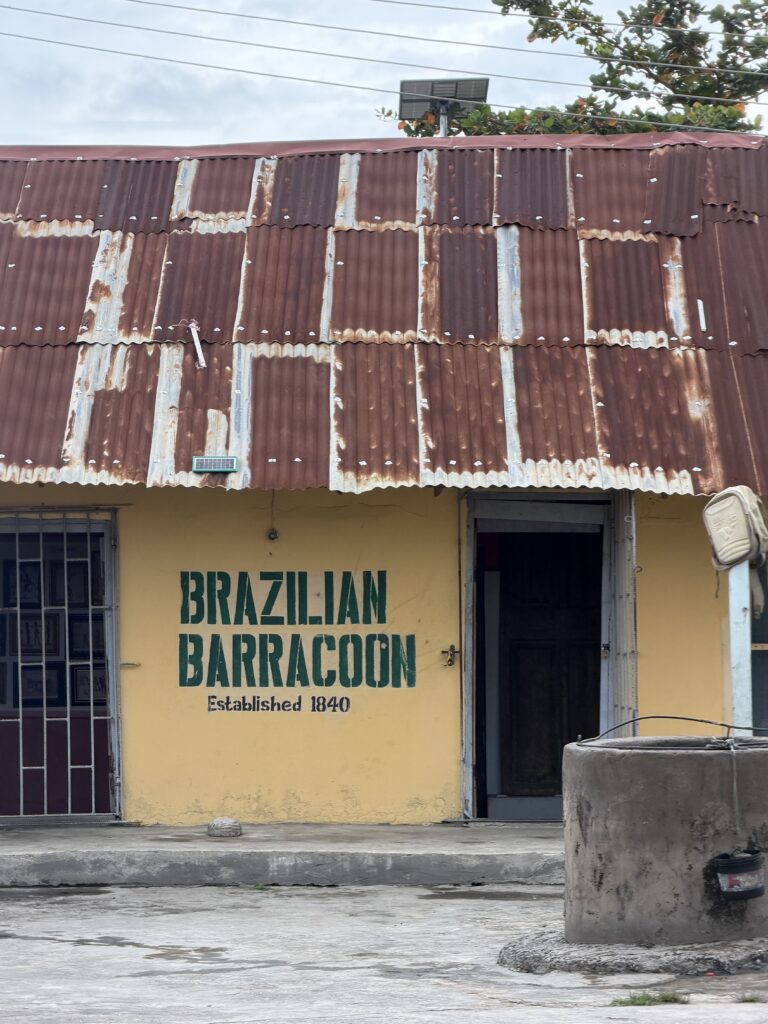
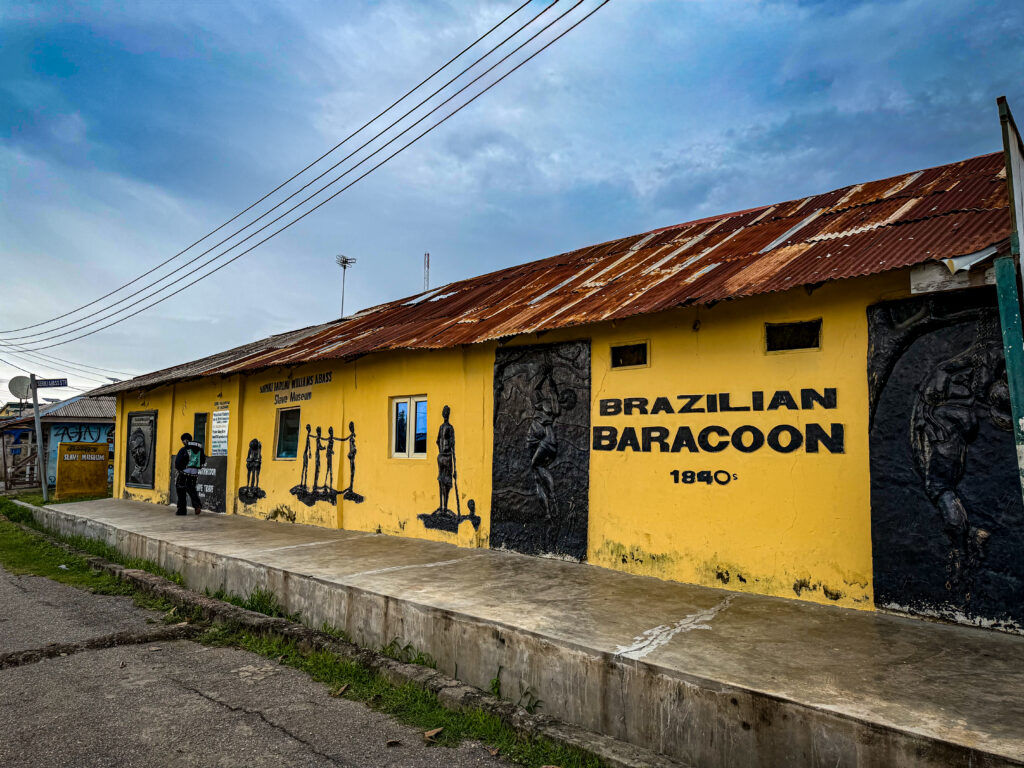
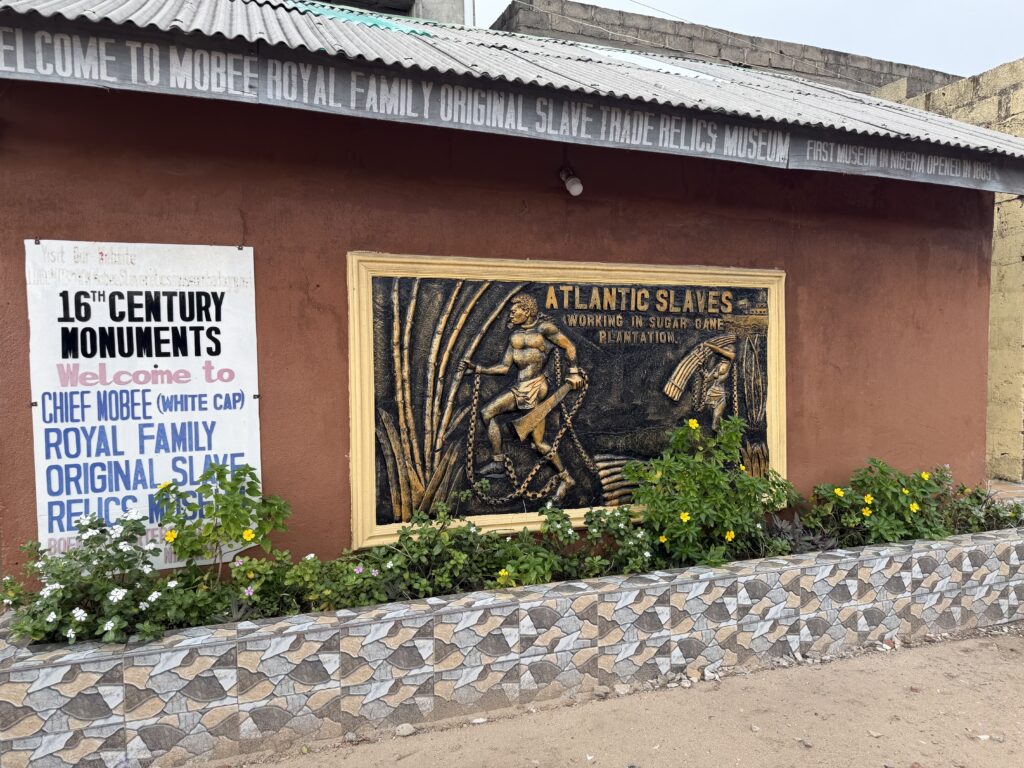
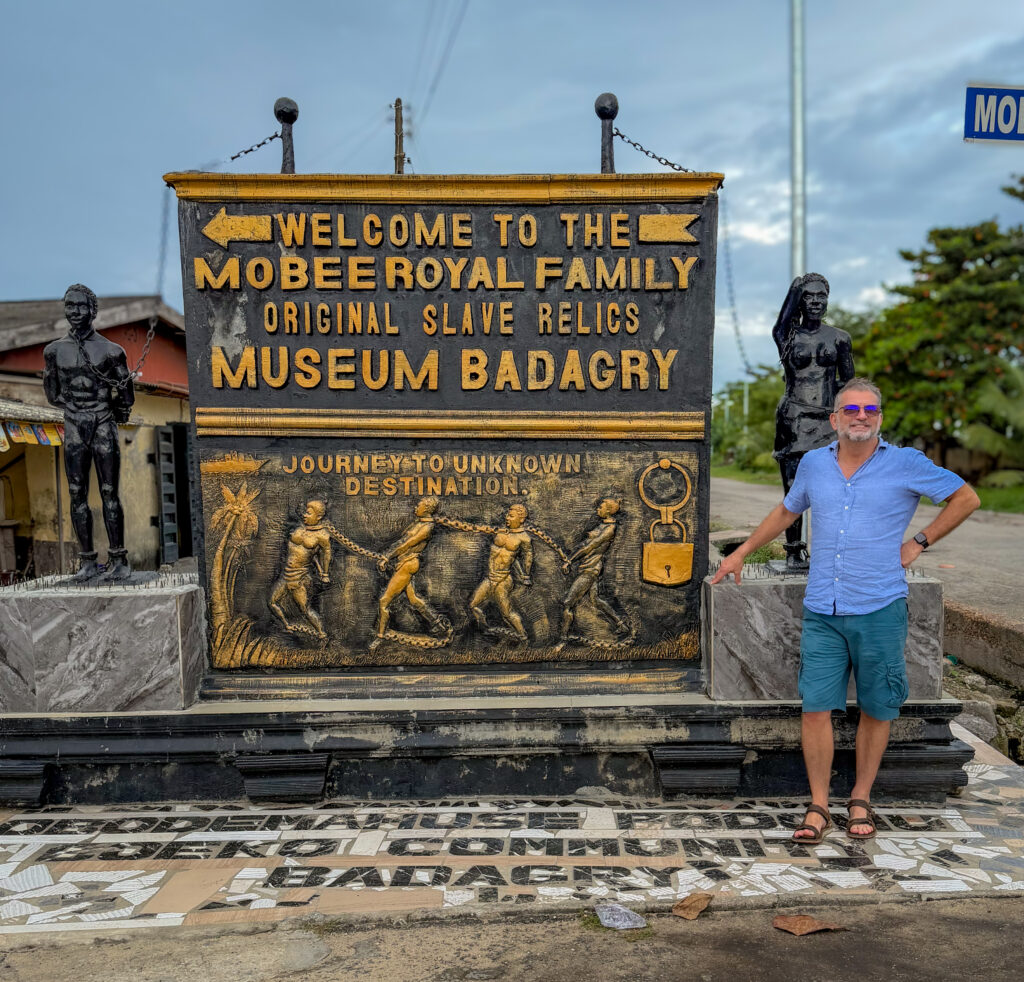
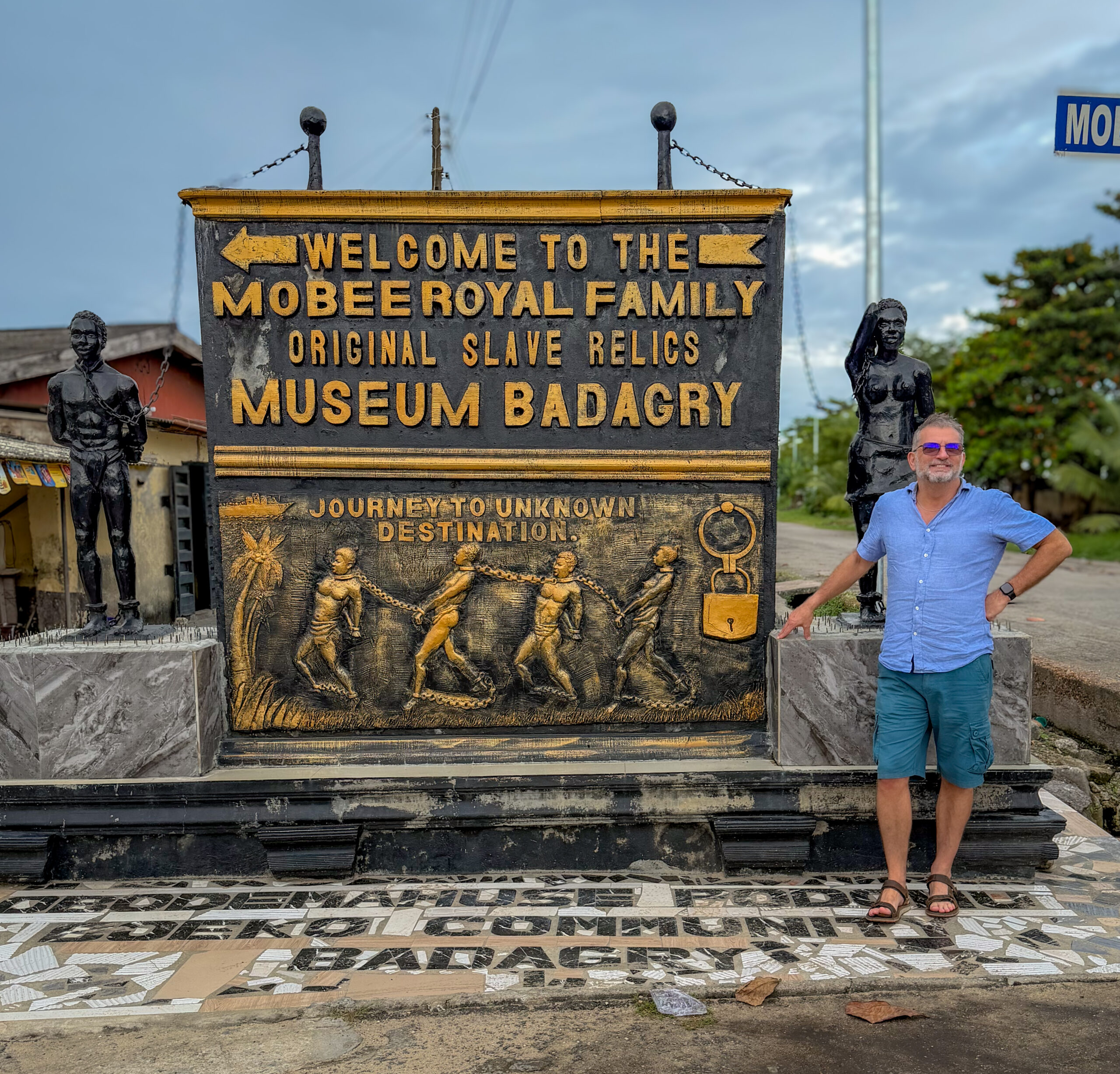
We visited on Sunday as a day trip from Lagos. Badagry contains a remarkable concentration of sites connected with the transatlantic slave trade, including the Badagry Heritage Museum, the Seriki Faremi Williams Abass Slave Museum and Brazilian Barracoon, the Mobee Royal Family Slave Relics Museum and the historic Vlekete Slave Market.
Several sites were open when we visited, though not all of them.
And this is very much Nigeria rather than a carefully packaged international heritage attraction. Don’t expect the polished presentation of a major European or American museum. Some of the buildings and exhibits are tired; interpretation can be basic, and visitor numbers surprisingly small.
But perhaps that makes the experience more immediate.
Badagry and the slave trade
Badagry’s geography explains much of its history. Sitting between the lagoons and the Atlantic Ocean, it developed as an important trading settlement. From the 16th century onwards, those trading networks became increasingly entangled with the transatlantic trade in enslaved Africans.
Men, women and children captured or purchased across the region were brought to Badagry. They were sold, imprisoned in barracoons while awaiting ships and eventually taken across the lagoon towards the Atlantic coast.
The surviving Brazilian Barracoon is particularly disturbing. Built in the 1840s, its small cells were used to confine people awaiting transportation. The story of its owner, Seriki Faremi Williams Abass, also illustrates how complicated the history can be: according to accounts preserved at Badagry and studied by historians, he had himself been captured as a child and enslaved before eventually returning to West Africa and becoming a slave trader.
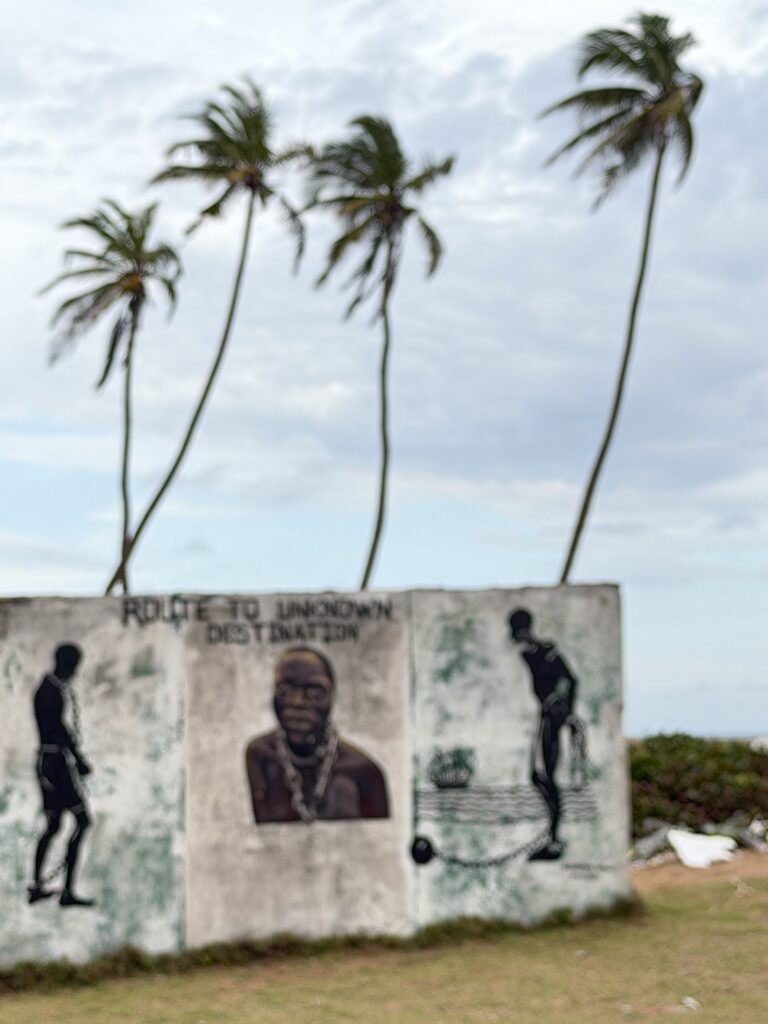
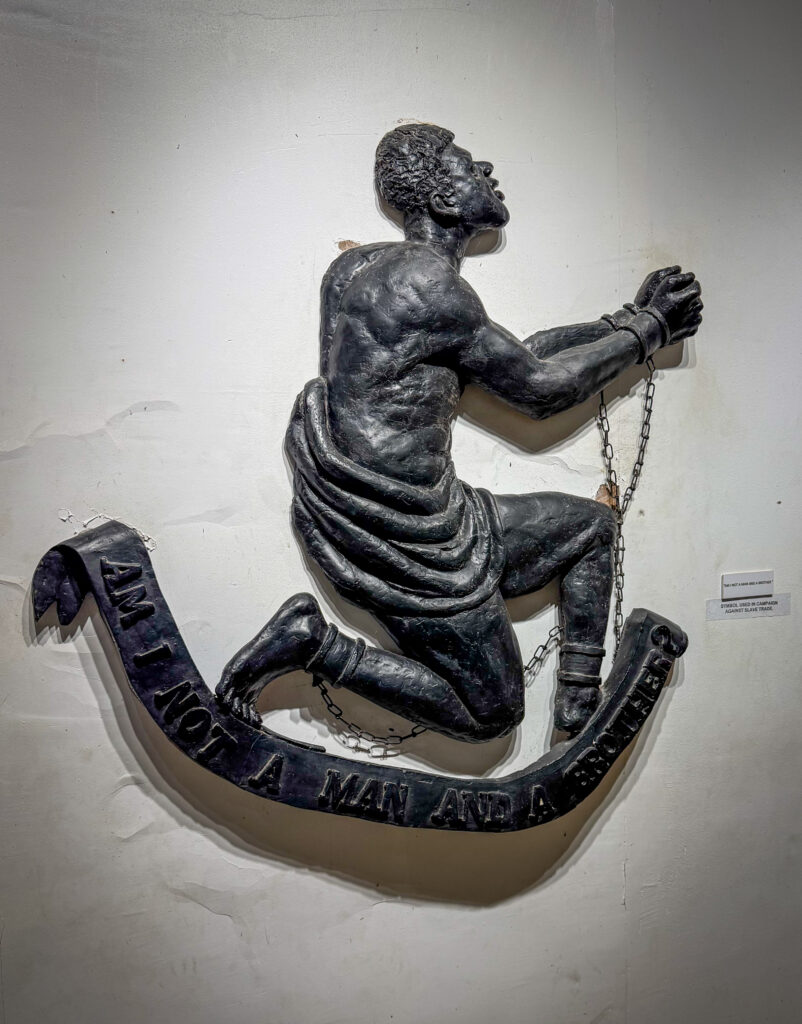
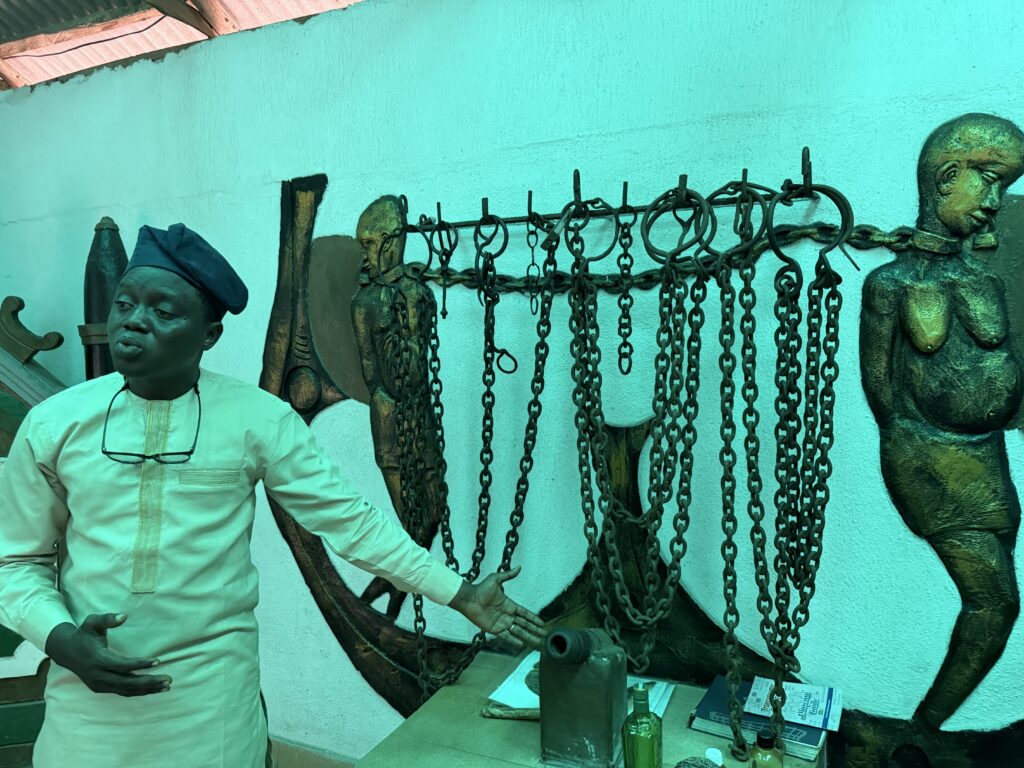
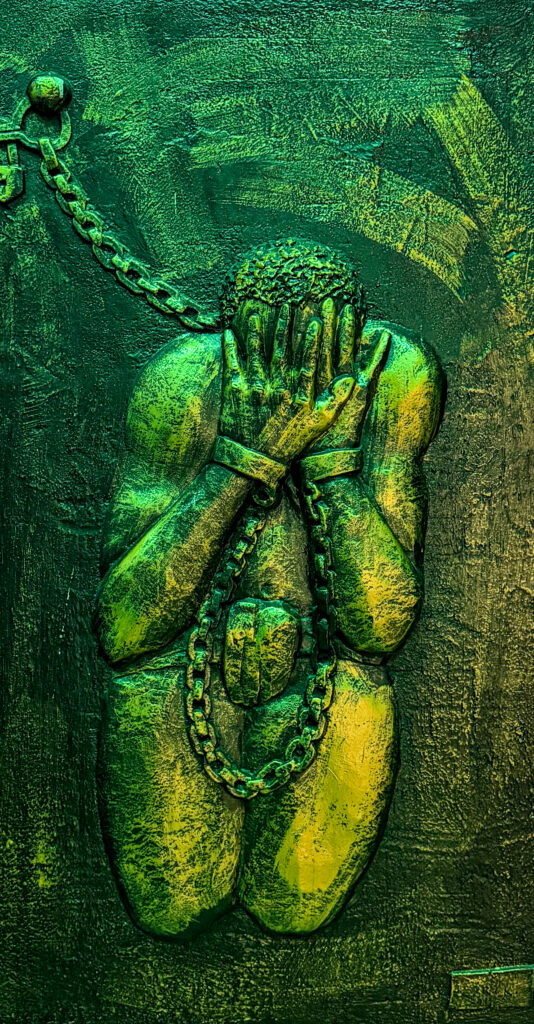
There are also surviving chains, shackles and other objects associated with the trade. They turn something we normally encounter as numbers in history books into something much more physical.
Across the lagoon
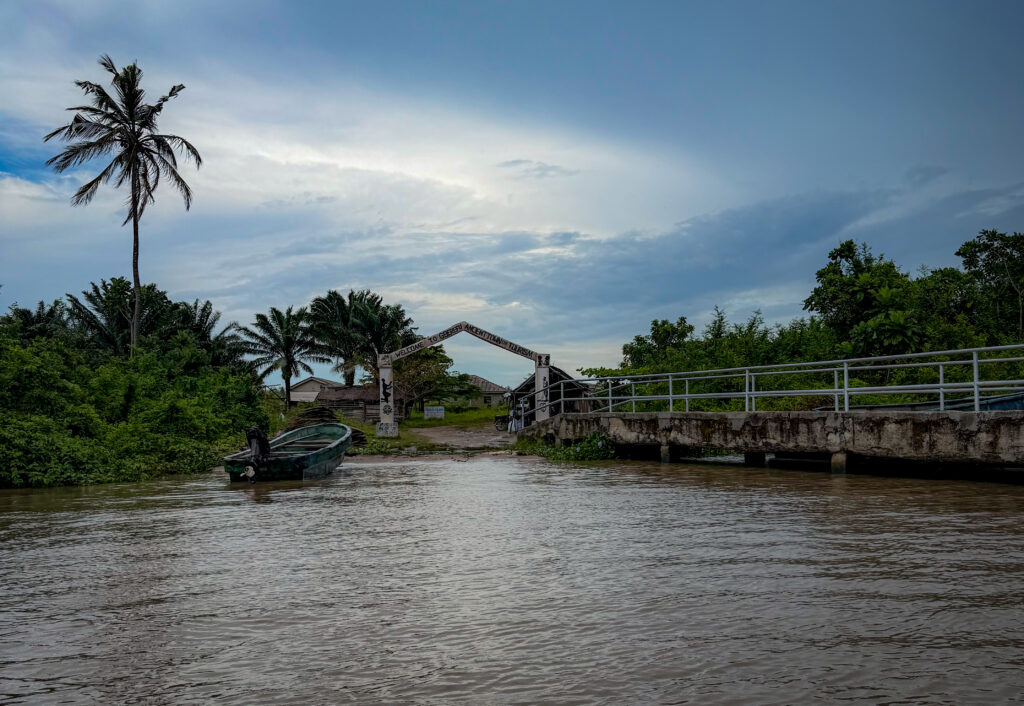
From Badagry we took a small boat across the lagoon to Gberefu Island.
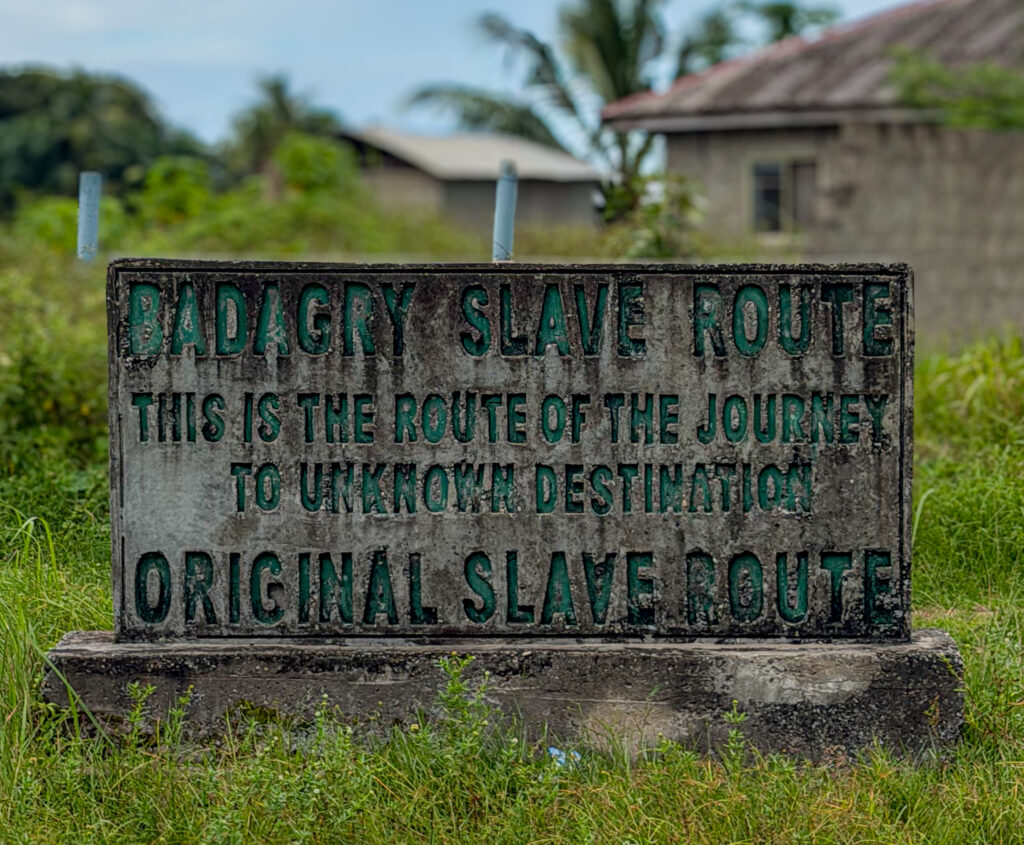
From there you walk along the old slave route towards the Atlantic Ocean and what is now known as the Point of No Return.
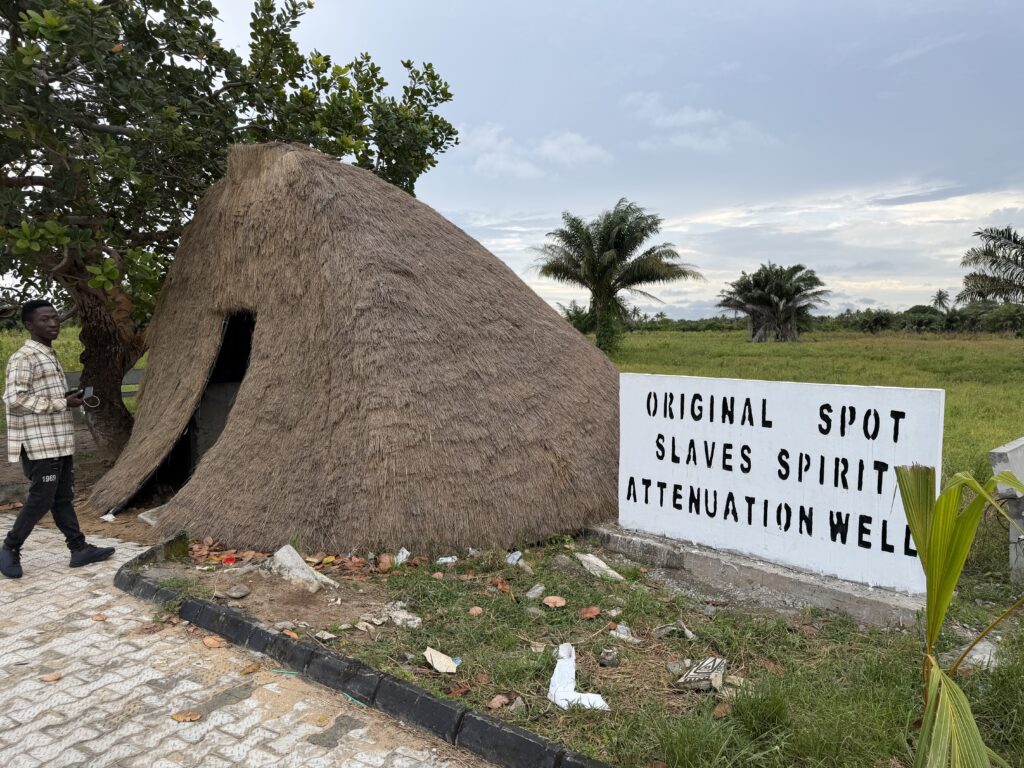
Along the route is the Slave Spirit Attenuation Well. Local tradition says enslaved people were forced to drink from it in the belief that the water would make them docile and cause them to forget their homes and identities.
It is important to distinguish tradition from established historical fact here: the well certainly forms part of Badagry’s contemporary memory of the slave route, but the supernatural properties attributed to its water are obviously a matter of oral tradition rather than something that can be historically demonstrated.
Then you continue towards the sea.
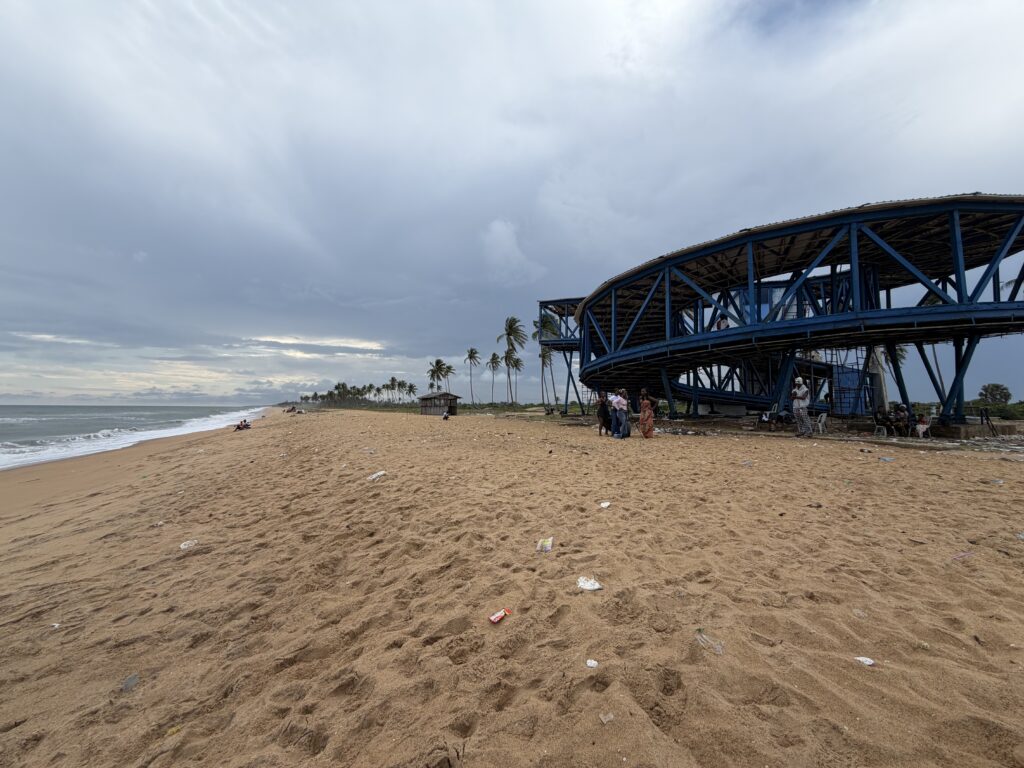
And eventually you arrive at the beach.
A beach with an extraordinary history
At first sight, there is nothing particularly remarkable about it.
There is sand, the Atlantic Ocean and waves breaking on the Nigerian coast. You could almost be standing on any number of beaches along the Gulf of Guinea.
Then you think about the people who stood here before you.
For countless enslaved Africans, this coastline represented the last sight of their homeland before being forced aboard ships and transported across the Atlantic. Those who survived the Middle Passage would find themselves in Brazil, the Caribbean, North America and elsewhere in the Americas.
For people of African descent across the Americas, places such as Badagry therefore have an importance that stretches far beyond Nigeria. Not everyone’s ancestors left Africa through Badagry — there were many embarkation points along the West and Central African coast — but this is one of the surviving places where the geography of the transatlantic slave trade can still be physically experienced.
You can stand where people were held.
You can cross the same lagoon.
You can walk towards the same ocean.
And you can stand on the shore from which people were taken away.
Nigeria should make much more of Badagry
That was perhaps the thing that struck me most.
Badagry ought to be one of the great heritage destinations of West Africa.
The history is already here. The original locations are here. Some of the buildings and artefacts survive. The lagoon and the route to the Atlantic mean that visitors can understand the journey geographically rather than simply looking at objects inside a museum.
Yet the whole experience feels strangely overlooked.
Like quite a few attractions I’ve visited in Nigeria, it isn’t particularly slick. Parts are run down. There isn’t always enough interpretation. Signage and facilities could be much better. And on our Sunday visit there simply weren’t very many people around.
In one sense that is rather sad.
Because imagine what could be created here.
With sensitive restoration, proper conservation, excellent historical interpretation and investment in the visitor experience, Badagry could become an internationally significant destination for people interested in African and diaspora history — particularly visitors from Brazil, the Caribbean, the United States and Europe.
It shouldn’t become a theme park. The history is far too serious for that.
But it deserves to be properly preserved, researched, explained and remembered.
More than a museum visit
Badagry isn’t an easy day out emotionally.
The most powerful part isn’t necessarily an exhibit or an artefact. For me, it was taking the boat across the lagoon, walking the route and finally reaching the Atlantic.
History can become abstract when it is reduced to dates and statistics.
Standing on that beach makes it considerably less abstract.
Millions of individual people were taken from Africa during the transatlantic slave trade. They had families, languages, homes, ambitions and lives. They were not simply historical numbers.
And places like Badagry allow us, however imperfectly, to stand in the landscape where part of that enormous human story actually happened.
It deserves far more attention than it currently receives.